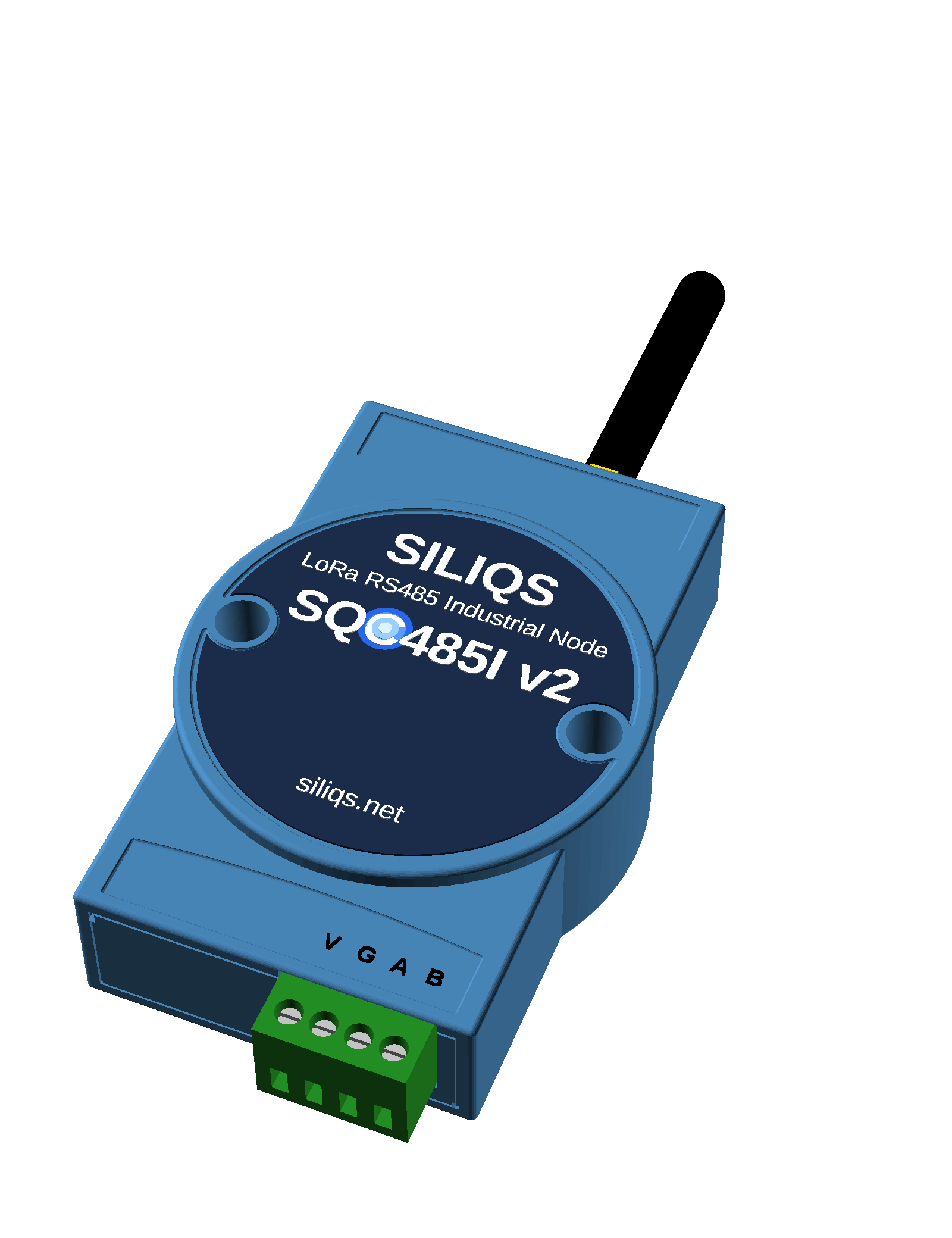
SQC485Iv2
Convert industrial RS485 / Modbus data into long-range LoRa — with protection rugged enough for real installations.
NT$1,200
Mesh mode
Nodes relay for each other into a self-healing wireless network — and the data never touches your corporate IP network.
| The usual hurdle | IP-based approach | Siliqs Mesh |
|---|---|---|
| A fixed IP from IT | Request and wait for a static IP | Not needed — nodes have no IP |
| Equipment on the LAN | Wire the device into the company network | Runs on the LoRa mesh, separate from the LAN |
| Security sign-off | Firewall exception and risk review | Channel PSK (AES-CTR) end-to-end; relays can’t read the payload |
| Getting it deployed | Network credentials, often IT on site | Set up in the field over USB-C / BLE — no credentials |
A secure, self-contained wireless network you deploy and own — encrypted end to end, from the field sensor all the way to your own dashboard.
Nodes multi-hop relay for each other; lose one and the network reroutes. Area coverage and range without any gateway or wiring run.
LoRa mesh transport, USB-C / BLE provisioning, and channel-PSK encryption mean nothing joins your corporate network — no IP, no firewall exception.
Field nodes carry no WiFi — wake, poll Modbus, send, sleep. Battery- and solar-friendly for sites with no mains.
A device-native tunnel mode bridges two RS485 buses over the mesh so they act as one long wire — frames forwarded raw, any protocol, not just Modbus.
Copy the built-in prompt into your own ChatGPT / Claude / Gemini, hand it the device’s Modbus table, and paste the returned JSON back — it becomes a config you flash from the browser. Your datasheet stays with you.
A free cross-platform gateway (Linux / macOS / Windows) reads the mesh over USB or BLE and forwards to your own MQTT broker → database, Node-RED, or Grafana. Standard payloads, no cloud lock-in.
Runs on a private channel with AES-128 or AES-256 PSK encryption — generate a random key in one click and share it only with your own nodes. Pick a custom frequency so the network stays isolated from public LoRa networks: invisible and unreadable to anyone else.
All of it from an install-free browser console: a built-in RS485 terminal to send and read raw frames and verify wiring before you automate, plus Web Serial flashing. Note — browser flashing and the terminal need Chrome or Edge on desktop or Android; the gateway runs on Linux, macOS and Windows.
Selected highlights — see the datasheet for the full tables.
| Wireless | LoRa® (long-range) + BLE 5.0 |
|---|---|
| Firmware variants | Mesh (SQC485Iv2-MH) or LoRaWAN® Class A/C (SQC485Iv2-LW) |
| Frequency | 920 – 925 MHz |
| Max TX power | +22 dBm (firmware-configurable) |
| RX sensitivity | −148 dBm (SF12) |
| RS485 | Industrial half-duplex; ±70 V fault, ±12 kV ESD; survives 25 V A/B miswiring; on-board 340 Ω termination |
| Supply | 8 – 30 V DC, or 5 V USB-C (≥ 500 mA); auto source select |
| 2.4 GHz | BLE 5.0 (internal antenna) |
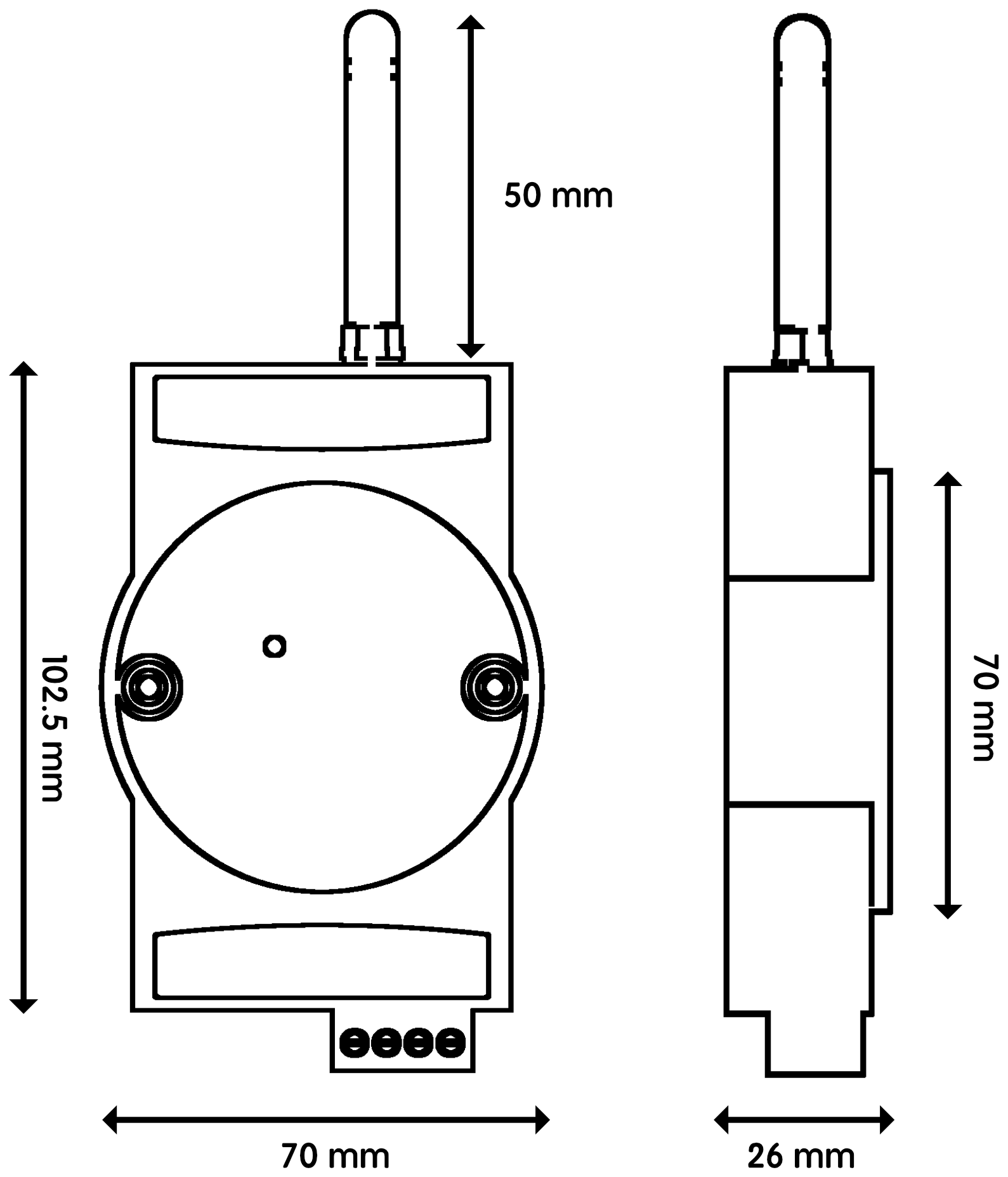
| Dimensions | Body 60 × 102.5 × 23 mm; Ø70 front label face; 2 × Ø3.5 mounting, 55 mm pitch |
| Operating temp. | −40 ~ 85 °C |
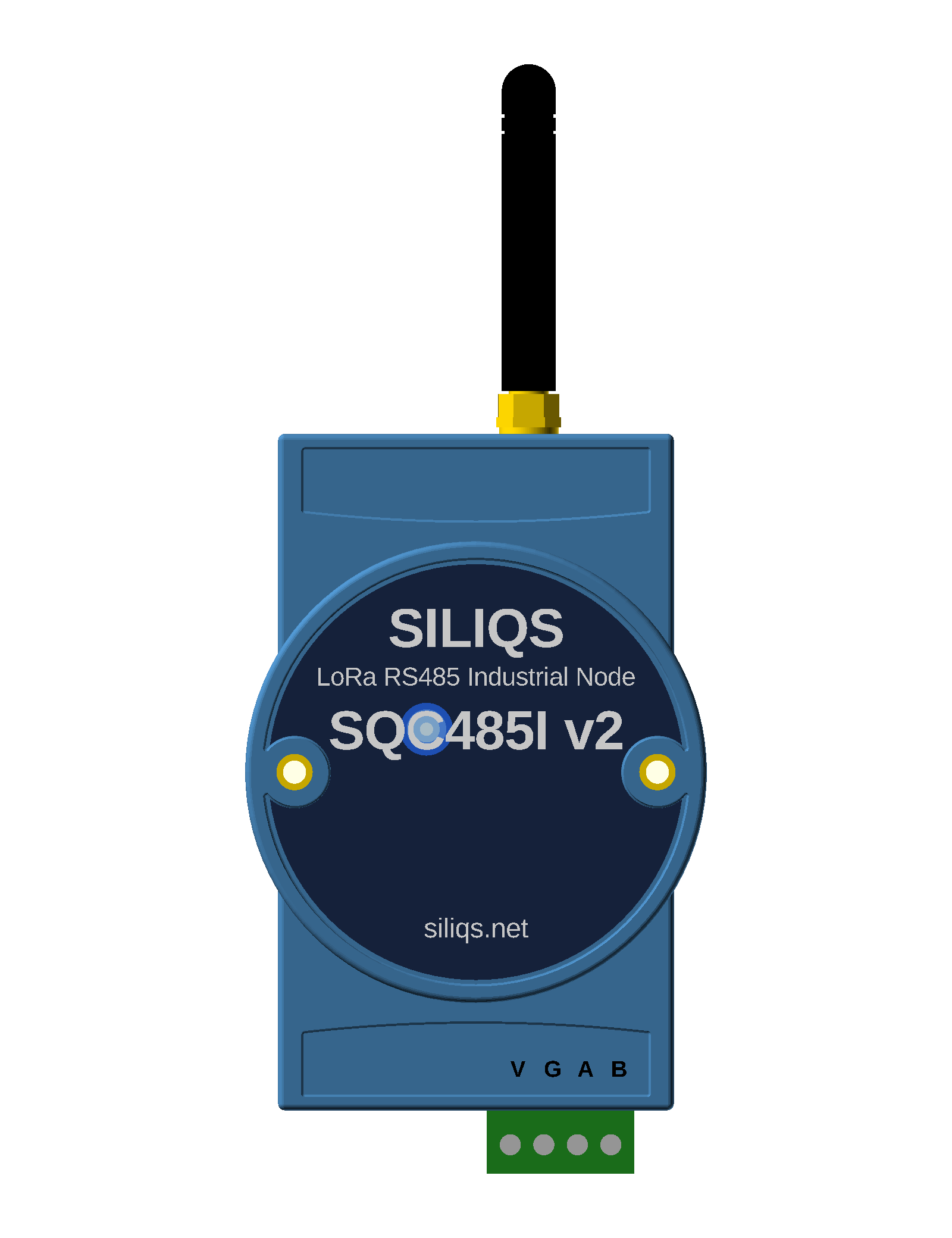
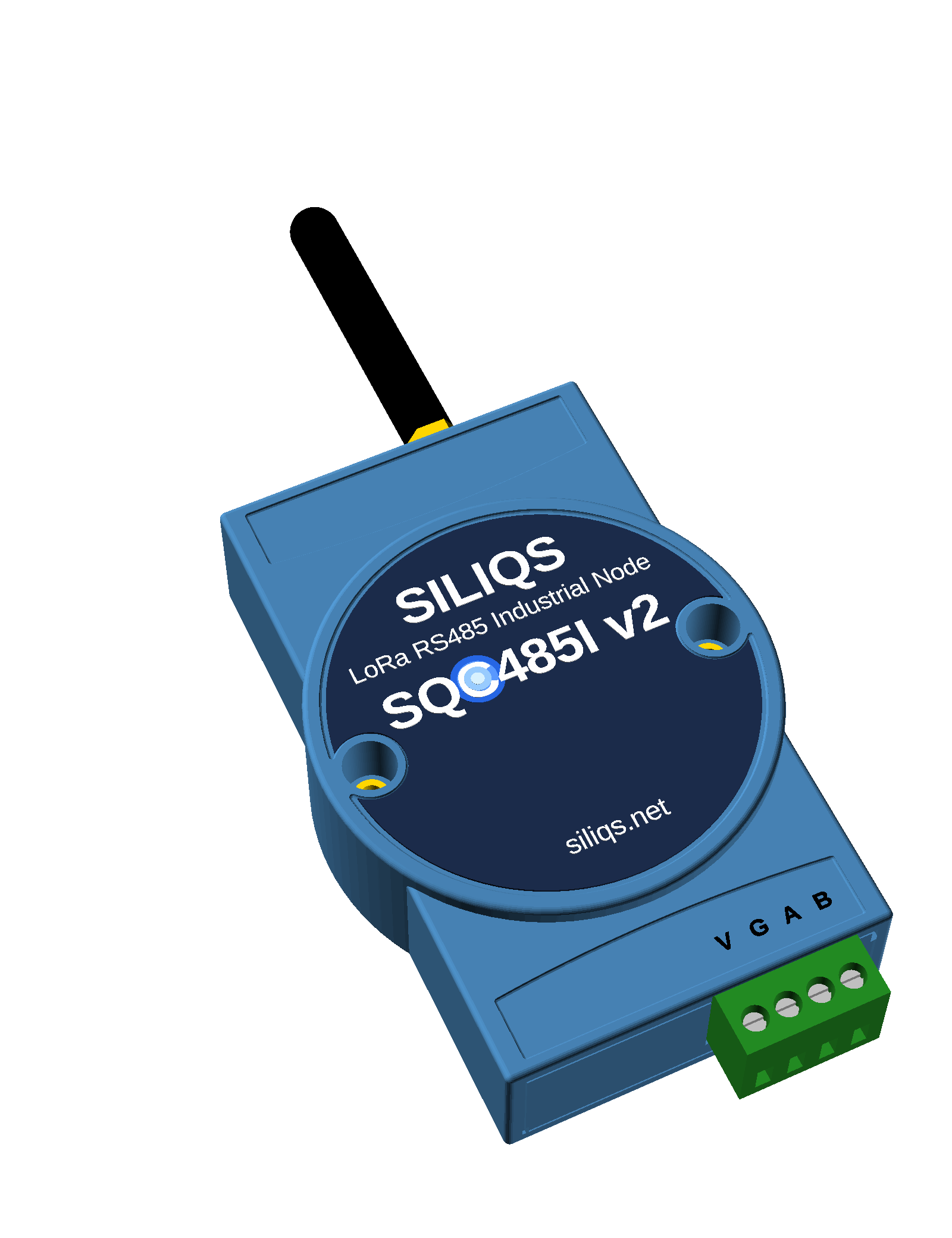
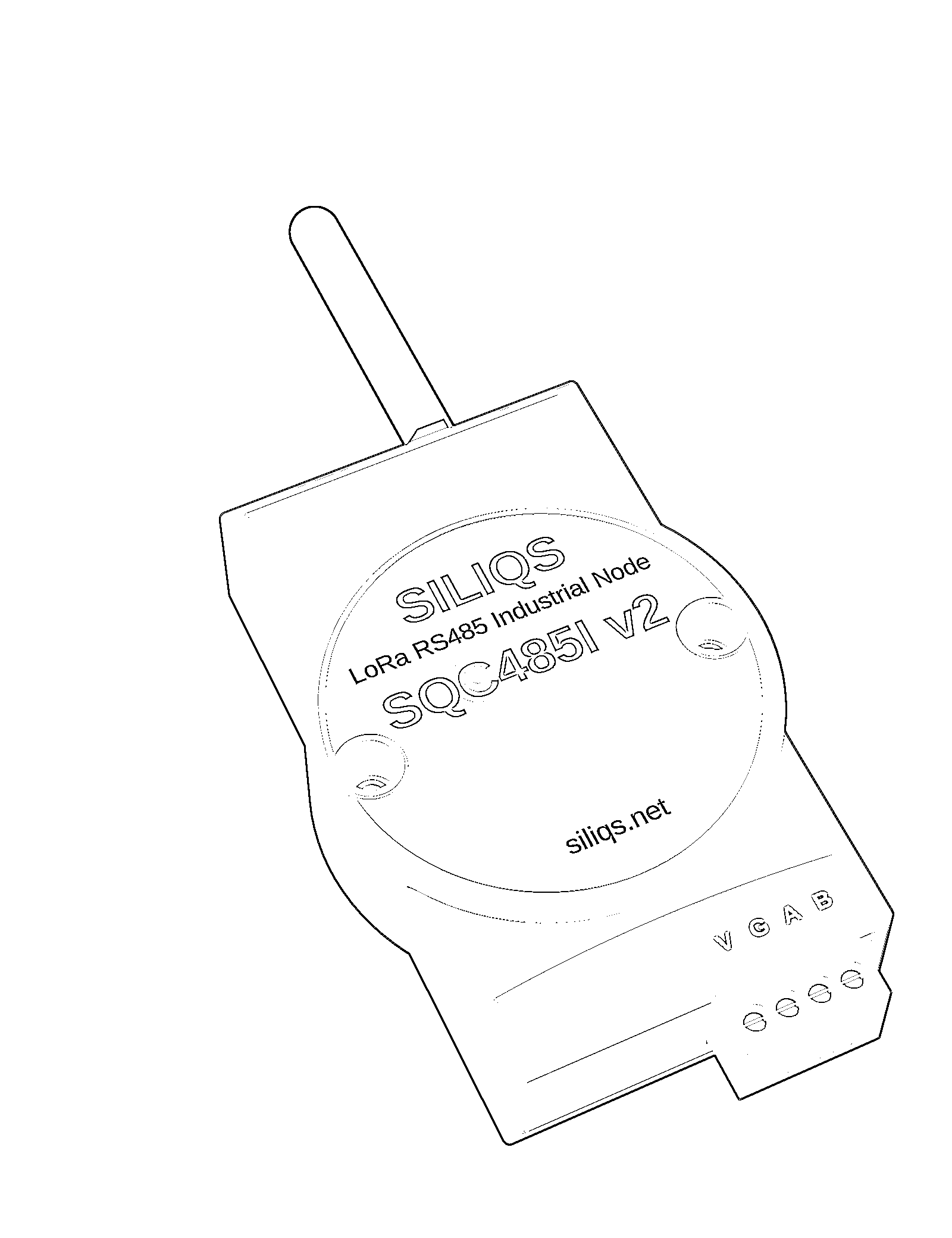
Datasheets, Rev 1.0 — Mesh (MH) and LoRaWAN (LW) firmware variants.
NT$1,200 · available now. Choose your firmware variant — same hardware.